
Insights for Change
Insights for Change is our series to pose questions and share short insights (our own and others’) for thinking creatively about faith and social change. They may be full-baked, half-baked, or just a pile of raw ingredients to play with. We hope they start conversation or inspire ideas. We invite you to add your own thoughts, experiences, and ideas to the mix.

We’re thrilled to share this essay by innoFaith founder, Danielle Goldstone, published in Duke Divinity’s Faith & Leadership. In it, she shares an insight emerging from the 2024-25 Mapping Spiritual Innovation Project in which innoFaith was a collaborator: Spiritual innovators and legacy religious institutions both have important roles to play in supporting the flourishing of our communities, so let’s design thriving local spiritual ecosystems that empower all spiritual stakeholders in a place to bring their gifts into collaboration for the good of all.
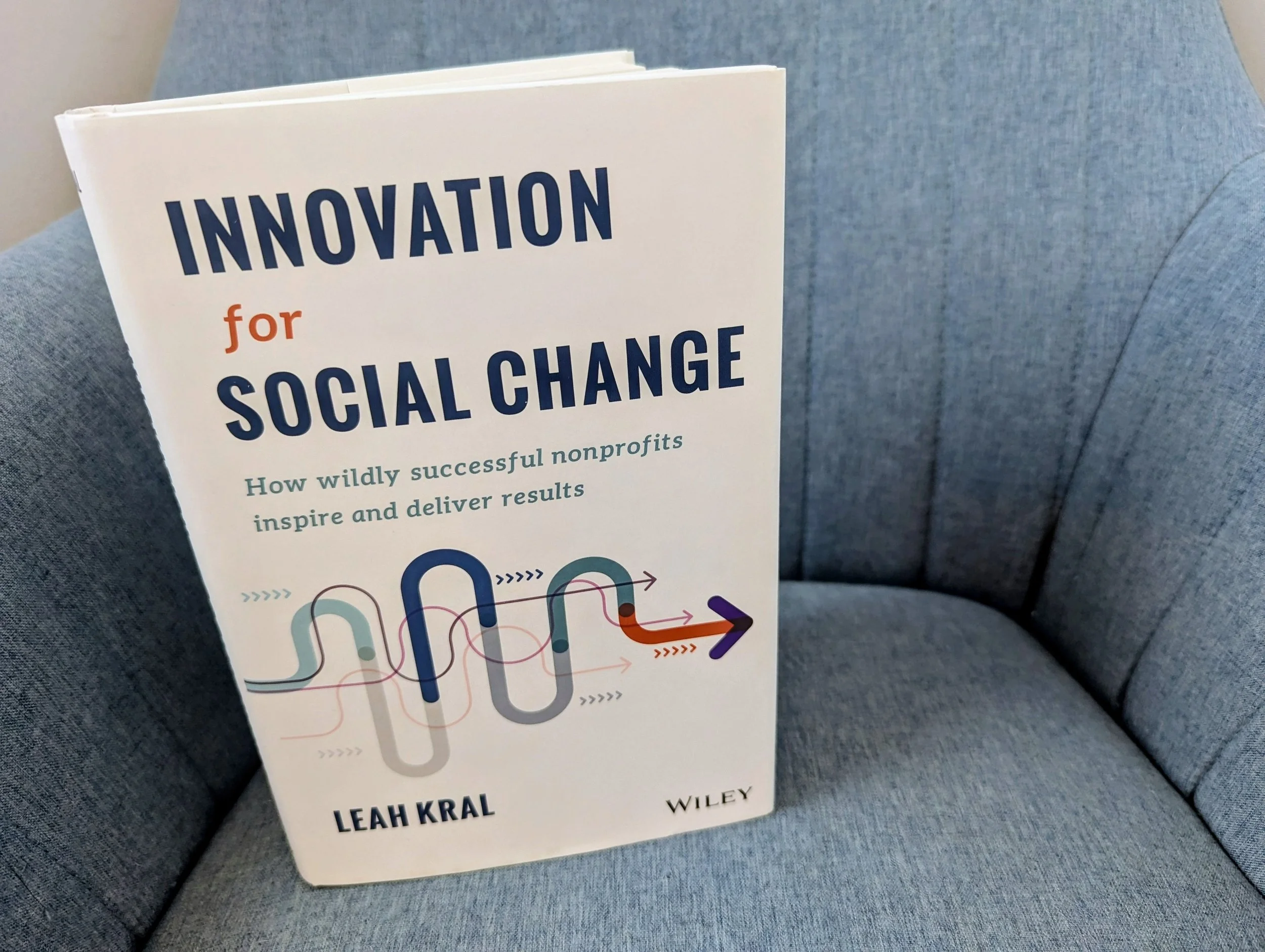
We hear often that we must innovate to survive, to progress, to succeed, but being told to innovate can be like being told to relax—easier said than done and incredibly frustrating to be told. That’s why I appreciate Leah Kral's book, Innovation for Social Change. Kral demystifies an intimidating concept, breaking it down into an accessible roadmap, including stories that ground it in reality and tools that make it actionable.

In October, innoFaith co-hosted a conversation in Chicago on spiritual innovation and local spiritual ecosystems. This conversation emerged from a national Mapping Spiritual Innovation project that we've collaborated on over the past year with Chaplaincy Innovation Lab, Glean Network, Faith Matters Network, as well as a range of other supporters and advisors. The research and our conversations with spiritual innovators have pushed us to ask not only about the role of the innovators but also that of legacy religious institutions in the midst of this shifting landscape. We are inspired by the different ways people and institutions nurture spiritual and religious life and how, out of that commitment, they create positive social change. We see enormous potential for the revitalization of faith and spirituality, in both old and new ways, as well as the thriving of communities if we can nurture and connect the roles that these different actors play.

A new report by CoCreative, The Human Heart of Systems Change, explores the challenges, needs, and opportunities in collaborative systems change work through interviews with twelve network leaders, field leaders, and funders. These conversations surfaced important insights about how the field can evolve to meet our current moment, including adopting a more human, love-based approach – a need that we believe illustrates why faith communities should see themselves as essential players in the work of systems change.

Over the past year, innoFaith collaborated with Chaplaincy Innovation Lab, Glean Network, Faith Matters Network, and other allies and advisors, to conduct a national field study on spiritual innovation. Thanks to the hard work of the research team at CIL, we’re pleased to announce that the initial report has just been released. With a rapidly shifting religious landscape in the U.S., we hope that this report is just the beginning of much more attention to this growing dynamic of innovation happening under the radar in the faith sector.

Faith & Philanthropy, an exploratory joint grantmaking initiative that aims to shape “a philanthropic landscape that embraces the transformative potential of spirituality and faith to address the pressing challenges of our time,” recently released a Spiritual Imagination report featuring twelve grantees rooted in various spiritual traditions that are leveraging faith and spirituality for social impact.

In January, the World Economic Forum released a report, Faith in Action: Religion and Spirituality in the Polycrisis, arguing for the relevance of religion and spirituality in a time of complex, intersecting, global social challenges. It features several examples of collaboration between business and faith-based organizations to address some of these challenges, as well as important insights and lessons for faith, business, and other leaders. It is an invitation to forge more multi-sector collaborations that leverage the wisdom and assets of faith to drive impact at scale.

Like every institution in the 21st century, religion today confronts existential questions about its future, uncertain of its place in an era where trust in institutions has eroded and traditional hierarchical organizational structures have started to flatten. The formerly reliable foundations of our religious life feel insecure–for no one more than clergy, who are largely trained to be solo, prophetic leaders of congregations. But in this uncertainty lies possibility. A new book by two religious leaders, Rev. Kathleen McShane and Rabbi Elan Babchuck, will help clergy, and all faith-rooted leaders, embrace the liberating opportunity this current moment provides. It’s time to adopt a new form of leadership, free of the burdens of pyramid-shaped empire that have shaped our past.

Houston, we have a problem. The complexity of the issues we face, both global and local, are simply too great for any one person or organization to take on alone. And yet, the systems in which we operate tend to incentivize heroic leadership, organizational competition for funding, and transaction over relationship. The good news? There's a different way if we shift our frameworks, incentives, and approaches: cultivating networks.

Last month, I attended a gathering of “spiritual changemakers.” Participants at this event, Soularize—co-hosted by Ashoka, The Presencing Institute, and Co-Creative—came from around the world and from all layers of spirituality and religiosity. They shared a common commitment to imagining a different world in which all people thrive, and to the role that spirituality plays in creating that world.

A couple of decades ago, the United Church of Christ launched a marketing campaign with the phrase, "God is still speaking." For people of faith, some version of that idea—that even in our modern world, faith still matters, the divine is still real and present, the wisdom of our traditions has something to say about our modern predicament—keeps us believing, praying, and acting according to our faith values and principles. Of course, some of our theologies proclaim that regardless of what we do or don't do, that God will find a way. Some of our theologies also teach, though, that we are the way, co-creators with the divine. So if we listen, if we pay attention to where faith is moving today in this time and place, what might we hear?

Ending homelessness is not a pie-in-the-sky aspiration for the organization Community Solutions. They are working to actually end it and have shown it’s possible. Fourteen counties across the U.S. have already reached “functional zero” homelessness—meaning it’s rare, quickly flagged when it happens, and quickly and sustainably resolved—using the Community Solutions methodology. In this Ashoka interview, founder Roseanne Haggerty talks about the approach and methodology.

I had the pleasure of being part of Spencer Burke’s Next Sunday Summit last month. Check out my conversation with Spencer on how our purpose as faith communities matters more than our form and how we need to expand our horizons and imagination about our spiritual, community, and change power.

If you need a place to start, read We Need to Build: Fieldnotes for Diverse Democracy, a new book by Eboo Patel, Founder of Interfaith America. It is at once a rare tribute in these anti-institutional times to the importance of civic institutions, and a broad call to action relevant to an era of rapidly multiplying social movements. But unlike most calls to action these days, We Need to Build does not emotionally incite us to a particular political position or rally us behind a cause. It invites us to do the deep, sustained work of building the society we want.

For a long time—long before the recent leak of a U.S. Supreme Court draft opinion suggesting the Court is poised to overturn Roe v. Wade—I’ve wished we could have a more nuanced cultural conversation about abortion. A conversation that would fully respect the rights of women without having to deny the sanctity of life before birth, that would trust women while embracing that women have different perspectives on the topic, that would center the equity issue of discrepancies in healthcare based on wealth and race, that would have as its goal creating the best outcomes for both women and children. Such a conversation feels like a pipe dream.

Faith-based innovation is having a moment. Or at least the start of a moment, one that will likely continue for some time as faith institutions wrestle with questions of how to remain relevant in this day and age and into a future of uncertainty. Faith-based innovation is by no means new, though, as Kenda Creasy Dean, professor at Princeton Theological Seminary and co-founder of Ministry Incubators, points out in her new book, Innovating for Love. And we definitely should not view it merely as a solution to institutional crisis, or a balm for institutional anxiety.

A Way Out of No Way pushes us to interrogate the forces and narratives that shape our own thinking. It makes us ask whether and how our innovation will perpetuate or transform the dynamics that exile people to the margins of society. Doing so will undoubtedly make all of us more effective change makers.

On a recent call, a friend of mine in Poland shared his take that the innovation of the underground Solidarity movement in 1980s Poland was that it basically ignored the tanks on the streets that threatened political repression. While the tanks rolled, the people went about building their own underground civil society, which then became the foundation for democratization. Surely they couldn’t actually ignore the threat, and Solidarity continued to organize protests against the government even after they went underground. But I think he meant that they did not let the tanks steal their focus. They didn't just act against something, they built something new. Underground, they built the structures for a democratic society.

As faith communities, we engage in so many essential social service efforts in our communities. It is sacred work to be present to people marginalized by the systems of our societies. It is also sacred work to change those systems. As we serve, we have the opportunity to learn, collect data, spot patterns that can help point to systemic solutions.

In April, we hosted a conversation with Henry De Sio, Stephen Lewis, and Rabbi Elan Babchuck about how people and communities of faith can lead in a world of explosive change. One thread that emerged in the conversation was the question of how faith institutions think about success in a changing world. As Elan explained, “The old way has an old set of KPIs [Key Performance Indicators]: budgets, butts [in seats], and and buildings. This puts us in the entertainment industry, not the transformation industry.” So let’s start imagining a different framework, one that helps us position our leadership to bring transformation to an increasingly complex world. What would that look like?

Even before the pandemic abruptly disrupted the entire planet all at once, our world had become a place of constant change and accompanying uncertainty. It’s a new game, different than the one many of us have been taught to play - the one that plotted a linear, generally secure path from education to job to career. And to power, for those with the ambition and privilege to land in positions of leadership. The game has changed, and how we equip ourselves for it is the question at the heart of a new book by Henry De Sio, Changemaker Playbook: The New Physics of Leadership in a World of Explosive Change. Hint: everyone leads.

A new report by the Bridgespan Group, Elevating the Role of Faith-Inspired Impact in the Social Sector, makes a case for bridging secular philanthropy and faith-inspired social impact organizations. The report addresses three myths: 1) that secularism is dominant, 2) that faith-inspired organizations represent only a minor part of the sector, and 3) that faith-inspired organizations are not innovative.

As predictable as the events of January 6 should have been, they have forced us to make a choice. And we should all take a deep breath and a hard look at ourselves, as a society and as individuals, before proceeding. …Our institutions remain strong. But what about us? Depending on how we direct it, that fury we feel can drive us either to real change or to civil war. Stepping out of the emotions of the last week (or years) and into a creativity or innovation mindset can help us choose the former. Specifically, if we activate our empathy, loosen our grip on our ideologies, and leverage our assets, we have a real chance at forging new horizons for our democracy in changing times.

In October, Pope Francis published his third encyclical, Fratelli Tutti (Brothers and Sisters All). For those not versed in papal encyclicals, they're significant communications from the Pope on particular aspects of Catholic doctrine, though they may speak to a broader audience than just Catholics. This Pope’s previous encyclical, Laudato si’, is a widely-read, profound, and pioneering statement on the ravages of climate change and our need to act, which has inspired numerous new initiatives and collaborations.
But an encyclical about brotherhood honestly sounded a little mundane to me. I sat back and started skimming, expecting a prophetic but predictable exhortation to love and neighborliness. By the end, I was quite literally at the edge of my seat, reading and re-reading portions. This wasn't prophetic, it was something better: real, relevant and actionable.

In September, the Fetzer Institute published What Does Spirituality Mean to Us? A Study of Spirituality in the United States, a fascinating snapshot of spirituality across the country and its relationship to community and civic action. One of the most interesting takeaways from the study is that while it shows a strong correlation between spirituality and pro-social action, fewer people explicitly make a connection between the two in their own lives.
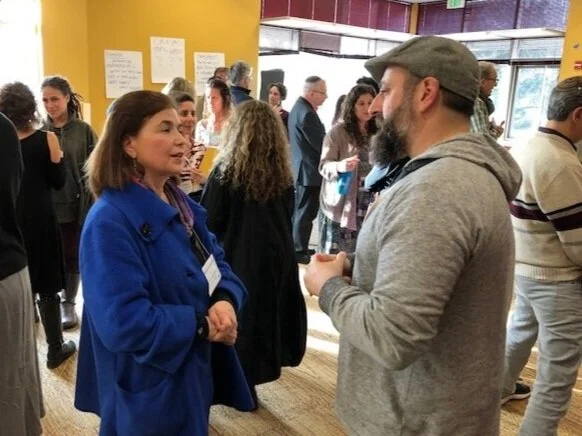
Last month, I had the opportunity to attend a gathering of the Kenissa network, a group founded by Rabbi Sid Schwarz, that brings together leaders who are re-imagining Jewish life and fostering "communities of meaning." Kenissa supports and connects these leaders to help their efforts and emerging communities to thrive. The gathering was representative of a growing movement of faith-based innovators operating outside the bounds of traditional religious institutions and a model of three characteristics I believe our religious institutions must learn to adopt if they are to flourish in the current era and into the future.

Social innovation has developed largely as a secular field despite its deep historic roots in people and communities of faith that have quietly and creatively responded to human and societal needs over centuries. It is essential that the faith sector take a place at the table because of the many assets it brings to the goal of solving our world's most pressing problems. Here are a few:

During a recent layover, I was wandering the airport bookstore and spotted Yuval Noah Harari’s bestseller Sapiens. “Everyone’s reading this,” I thought. “Maybe I should, too.” But then I saw his follow-up book, Homo Deus: A Brief History of Tomorrow, which I had never heard of but the title of which sold me immediately. … Harari makes some frustratingly sweeping and aggressive statements about religion that seem unnecessary to make his point. But behind them is a truth that institutions of faith need to confront: We’re becoming irrelevant because we’re not in the game. Our traditions may serve a purpose for a while - as sources of comfort in a chaotic world that we don’t really understand, where people like Harari are talking about the imminence of unfathomable things like superhumans and cyborgs. But if that’s the only purpose we’re serving, then we’ve already lost the long game.

We don't often tell them as innovation stories, but history is full of examples of faith communities and institutions developing new ideas for addressing social problems. All the destructive things done in the name of religion or by religious people and leaders notwithstanding, when one looks to where good is happening in the world, one will often find people of faith. From building social movements to building schools and hospitals, faith communities have been innovating solutions, often quietly, for the good of humanity for millennia. And they are still doing so today, though the scale of these efforts sometimes feels small under the weight of today's complex problems.
Until one learns about Akshaya Patra.
There's a moment from my theoretically successful but short-lived piano-playing phase in my youth that I will never forget. At a lesson one day, my piano teacher, Mrs. K, took away the music sheets and told me to just play something of my own. I can't remember if she articulated it quite this way, but in my memory, she effectively told me to compose something on the spot. I held my hands over the keyboard for what felt like an eternity of silence. I froze. I was terrified to play even a single note. Mrs. K finally relieved me of the embarrassment, and we went back to our usual lessons.